Incident Response Automation: Detect Faster, Alert Smarter, Recover Quicker

The problem with manual incident response
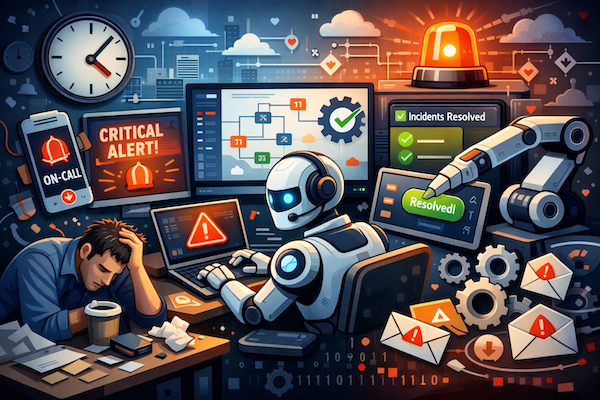
Most outages don’t fail because systems break. They fail because humans react too slowly, miss signals, or get overwhelmed by noise.
Manual incident response usually looks like this:
- Monitoring detects something
- Alerts flood Slack or email
- Someone hesitates: is this real?
- Escalation is late or wrong
- Customers notice before engineers do
The result: longer downtime, stressed teams, and lost trust.
What incident response automation really means
Automation doesn’t mean removing humans. It means removing friction.
Effective automation focuses on three layers:
- Detection – identify real failures fast
- Alerting – notify the right people, with context
- Escalation – ensure ownership until resolution
If any of these stay manual, incidents slow down.
What you should automate (and what you shouldn’t)
Automate aggressively
- Uptime checks and health probes
- Alert routing based on service ownership
- Severity classification (warning vs critical)
- Escalation timers when alerts are ignored
- Status page updates (initial incident only)
Keep human judgment for
- Root cause analysis
- Complex remediation steps
- External communication tone
Automation handles speed. Humans handle nuance.
Alert fatigue is a design failure
Too many alerts mean no alerts.
If everything is urgent, nothing is.
Automation must reduce noise, not amplify it.
Best practices:
- Alert only on user-impacting failures
- Use retries before triggering incidents
- Group related failures into a single alert
- Page humans only when automation can’t resolve
A quiet on-call is a sign of a healthy system.
A simple automated incident flow
- Service goes down
- Automated checks confirm failure
- Alert is triggered with context (service, region, time)
- Notification sent via Slack, SMS, or webhook
- Escalation starts if unacknowledged
- Incident is resolved and alerts stop automatically
No dashboards to watch. No inbox monitoring. Just action.
Where AlertsDown fits
AlertsDown is built for the alerting layer, not bloated monitoring.
It focuses on:
- Fast downtime detection
- Clear, actionable alerts
- Simple integrations (Slack, webhooks, email)
- Reliable escalation without noise
You don’t need 50 metrics to know your service is down. You need one alert you can trust.
Final thought
If your customers report outages before your alerts do, your incident response is already broken.
Automate detection. Simplify alerts. Respect human attention.
Downtime is inevitable. Chaos is optional.
Explore related uptime monitoring solutions
Compare tools with our UptimeRobot alternative guide for faster downtime alerts.
Reach teams instantly with Telegram downtime alerts or SMS alerts for critical incidents.
Share outages transparently with a public status page that updates automatically.
See how pricing plans scale from free monitoring to multi-site coverage.
Monitor your sites with AlertsDown
Monitor your sites with AlertsDown – get started for free in 2 minutes.